
Description
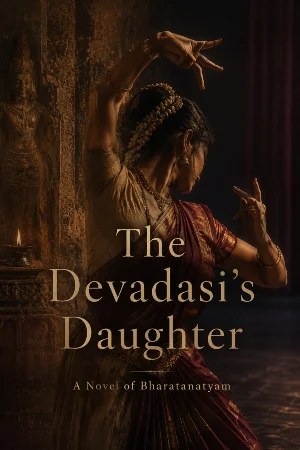
The anti-nautch movement of the early 20th century abolished the devadasi system — temple dancers whose art was simultaneously sacred, professional, and, critics argued, exploitative. What it also did, less discussed, was sever the living transmission of a dance form from the women who had kept it alive for centuries, and hand it to a Brahmin-led revival movement that reconstructed it as concert art.
Meenakshi Sundaram has been dancing Bharatanatyam for thirty years. She has also been thinking about this history for thirty years. The Devadasi’s Daughter is what happens when a dancer who is also a novelist finally writes the book she’s been carrying.
The novel moves between 1920s Thanjavur, where Rukmini’s mother is one of the last devadasis dancing at the Brihadeeswarar temple, and present-day Chennai, where Rukmini’s granddaughter Kavitha is preparing for her arangetram at a prestigious dance academy. Same abhinaya, same adavus, same stories of Shiva and Murugan. Completely different context, completely different body knowledge.
Sundaram writes the dance sequences with a technical precision that never becomes jargon — you don’t need to know what a nattadavu is to feel what it means in the body of a woman who has done it ten thousand times. The novel’s argument about cultural appropriation is made not in any character’s dialogue but in the specific difference between how the two women hold their shoulders.
Precise, angry in the quietest possible way, and written by someone who actually knows what she’s talking about.




Reviews
There are no reviews yet.