
Description
Rajan Irani grew up in Girgaon in the 1970s, in a chawl that was demolished in 1998 for a building that was itself replaced in 2015. He has spent his career writing about a city that eats its own history faster than anyone can record it.
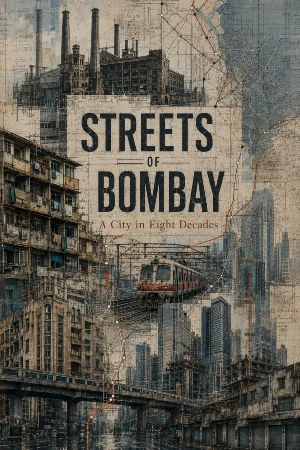
Streets of Bombay is structured decade by decade, from the 1940s to the 2020s, with each chapter anchored in a specific neighbourhood. The textile mill district in the 1950s, when Bombay was genuinely an industrial city and mill workers had a middle-class life. Dharavi in the 1970s, not as the slum of Western imagination but as a working neighbourhood with its own internal economy and geography. South Bombay in the 1990s, when the old Parsi and Goan Catholic families started selling flats that their grandparents had bought for nothing.
The chapter on the 1992-93 riots is the most carefully written — Irani is clearly aware that this is the part most likely to be misread, and he writes it with a precision that resists both sanitising and sensationalising. What happened in those months changed the city’s residential geography permanently. He shows you the specific streets that changed, and what they looked like before.
The final chapter, on the pandemic city of 2020, is unexpectedly moving — a city stripped of its famous density, its noise, its crowds, suddenly visible in a way it never allows itself to be.
Essential for anyone who loves Bombay, and useful for anyone who wants to understand how Indian cities actually work.




Reviews
There are no reviews yet.