
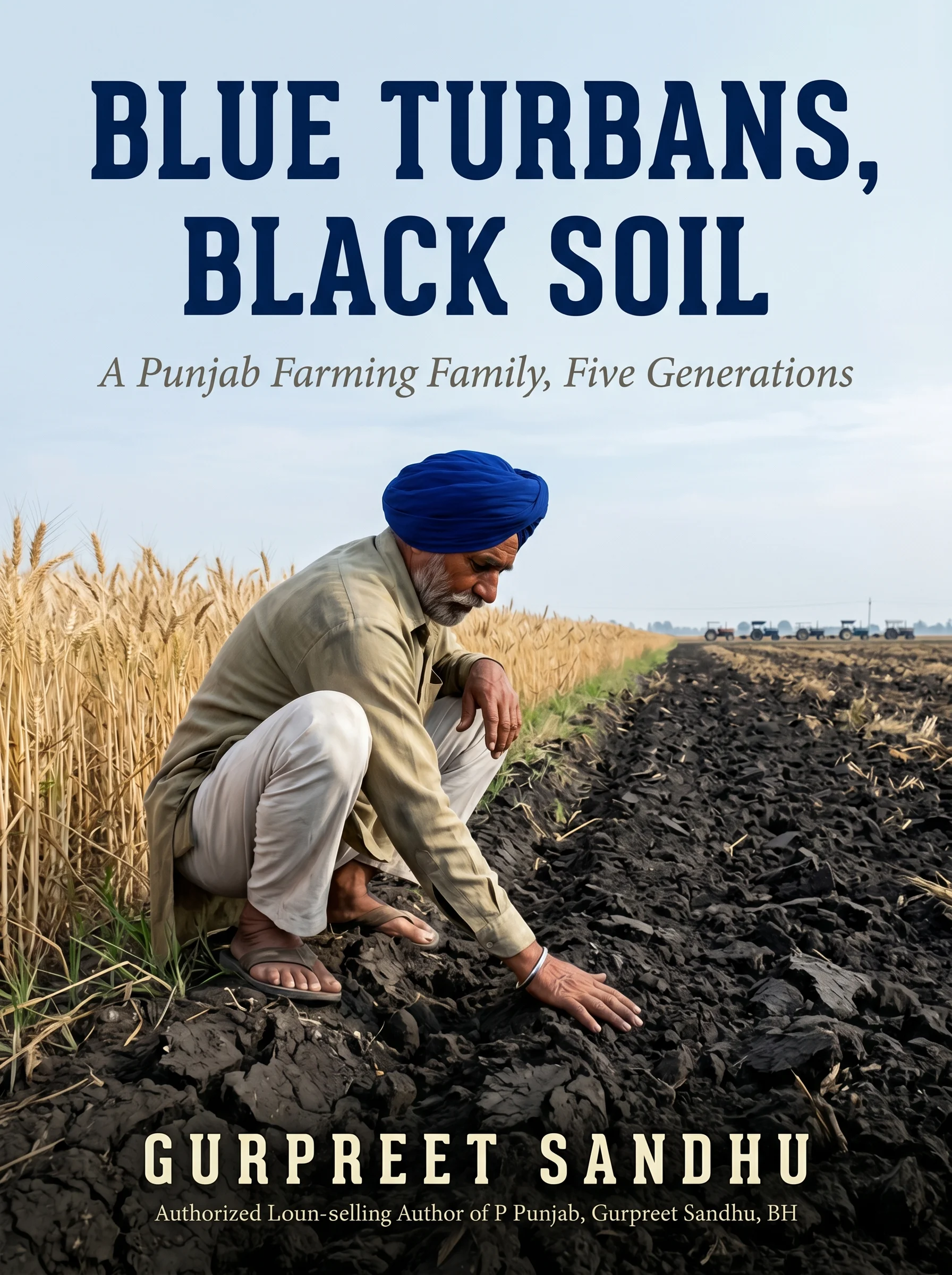
Description
Gurpreet Sandhu’s family has farmed the same eight acres in Ludhiana district since 1908, when his great-great-grandfather was allotted the land as part of the British canal colony scheme in west Punjab. The land survived partition — barely, and with a story attached that the family still doesn’t tell in full. It survived the Green Revolution, which saved Punjab from famine and also began quietly poisoning its water table. And in 2020, Sandhu’s father drove his tractor to Delhi.
Blue Turbans, Black Soil is structured as a family history but it’s really an argument about land — what it means to own it, what it costs to keep it, and what happens to a people when the relationship between them and their soil gets mediated entirely by government policy and corporate supply chains.
The Green Revolution chapter is the most complex. Sandhu doesn’t flatten it into either triumph or tragedy — his grandfather benefited enormously from the new wheat varieties, bought a second tractor, sent two sons to college. His father inherited land with depleted soil and a bore well that hit water fifty feet deeper than it did in 1975.
The 2020 farm protest section was written partially from the protest site itself. Sandhu was there, with his father, for eleven of the thirteen months.
This is the kind of book that makes you understand a news event you thought you already understood. It’s also just a very good family story.

Reviews
There are no reviews yet.