
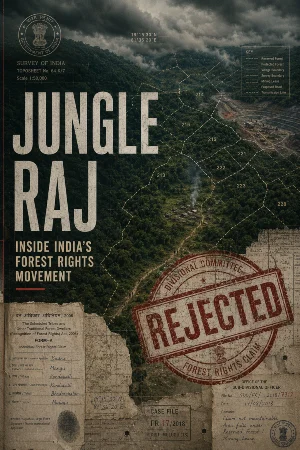
Description
The Forest Rights Act of 2006 was one of the more genuinely radical pieces of legislation independent India has produced. It acknowledged, in legal terms, that the forest-dwelling communities who had been dispossessed by colonial forest laws and then by post-independence conservation policy had rights to the land they’d been living on for generations. It created a mechanism to recognise those rights.
Amrita Nair-Ghaswala has spent four years travelling through Jharkhand, Odisha, Chhattisgarh, and Maharashtra asking a simple question: why hasn’t it worked? The answer she gets, from forest officials, from Adivasi community leaders, from district collectors, from wildlife conservationists, from mining company representatives, is a different version of the same story depending on who’s telling it.
Jungle Raj is structured around six specific communities whose claims were filed, processed, and either rejected, delayed, or granted on paper but unimplemented in practice. Nair-Ghaswala spent extended time in each, and the portrait that emerges is of a bureaucratic system so layered with competing interests — forest department, revenue department, tribal welfare department, mining leases, conservation NGOs with their own politics — that the law gets absorbed and neutralised before it can act.
The book is careful to hold the conservation tension honestly. Some of the resistance to forest rights claims comes from people who genuinely believe, not cynically, that recognising Adivasi land use will harm biodiversity. Nair-Ghaswala interviews them seriously and also shows, with specific evidence from specific forests, where that belief is wrong.
Rigorous, infuriating, and necessary. The kind of journalism that earns its length.




Reviews
There are no reviews yet.