
Description
Nalini Tripathi began training in Kathak at age six. She gave her first solo performance at nineteen. She is now fifty-one and has performed in forty-three countries, and she will tell you, without bitterness but without softening it either, that she has never made a living wage from dance alone.
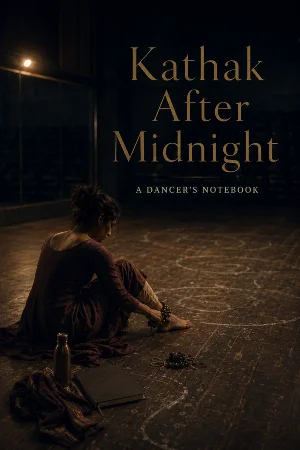
Kathak After Midnight is structured as a dancer’s notebook — not linear, not chronological, but the way a performer actually thinks about their art, in fragments and obsessions and returning questions. A chapter on the tatkaar, the footwork that is Kathak’s foundation, becomes a meditation on repetition and what changes after ten thousand hours of the same exercise. A chapter on the ghunghroo — the ankle bells — becomes an essay on the devadasi history that Kathak shares with Bharatanatyam, the same complicated legacy approached from a different geography.
The sections on teaching are unexpected and valuable. Tripathi has trained hundreds of students over thirty years, most of whom will never perform professionally. She thinks carefully about what she’s actually transmitting to them — not just technique, but a way of organising attention, a relationship to time that classical music and dance develop and that has no equivalent elsewhere.
She is sharp about the economics. The government’s cultural funding system, the academy fellowships, the Sangeet Natak Akademi machinery — she has navigated all of it and has precise views about what it does and doesn’t support. The conversation about which classical forms get resources and which don’t, and why, is one the arts establishment has been avoiding for decades.
Beautifully written. Not a complaint, though it has every reason to be. More like a long, honest look at what a life in classical arts actually costs and gives.




Reviews
There are no reviews yet.