
Description
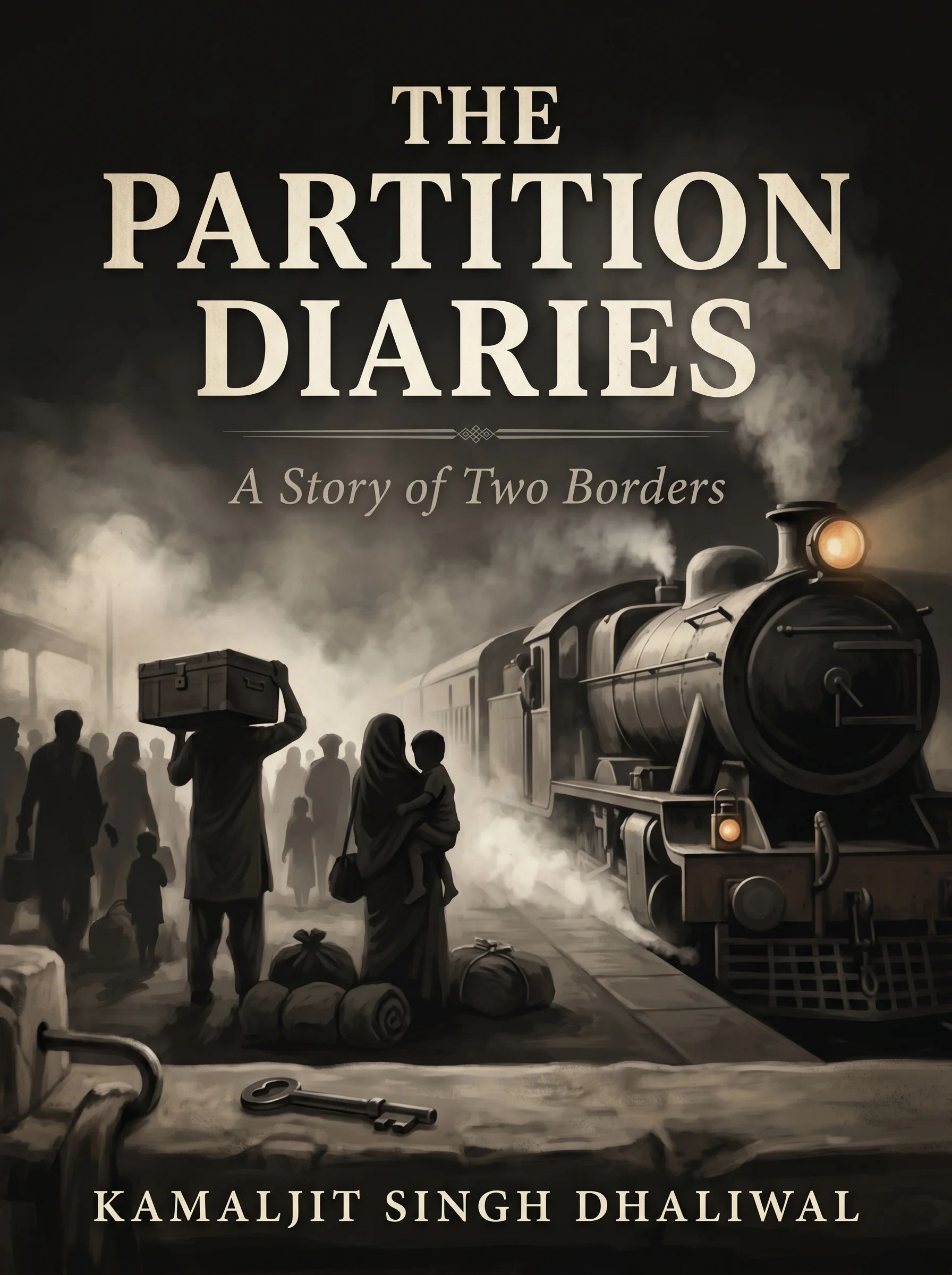
Kamaljit Singh Dhaliwal was nine years old when his grandfather finally talked about the partition. Not the facts — those he’d heard before, in school, in documentaries, in the polite distance of history books. But the specific weight of a locked trunk his grandfather carried from Lahore and never opened again. That trunk is in this novel.
The Partition Diaries follows three families across a single week in August 1947 — a Sikh family in Lahore packing what they can carry, a Muslim family in Amritsar doing the same thing in reverse, and a British officer in Delhi writing reports that will never capture what is actually happening in the streets outside his window.
Dhaliwal doesn’t write partition violence the way most novels do — at a remove, through implication. He puts you inside it, in the specific chaos of a train platform at two in the morning, in the mathematics of what fits into one trunk, in the particular cruelty of leaving a house key on a hook because you still, somehow, imagine coming back.
The novel’s most devastating section is its quietest: a chapter set in 1987, forty years later, when one of the survivors visits Lahore on a tourist visa and stands outside what used to be his family home. The current owners invite him in for tea. He accepts. Nobody mentions what the house used to be.
This is partition literature that doesn’t flinch but also doesn’t perform its grief. Dhaliwal trusts the story to carry the weight. It does.

Reviews
There are no reviews yet.