
Description
Old Delhi has been written about constantly and understood rarely. Most writing about Chandni Chowk approaches it as spectacle — the noise, the density, the food, the chaos that tourists photograph and journalists describe. Suresh Kumar Lal grew up two lanes off the main road and has zero interest in spectacle.
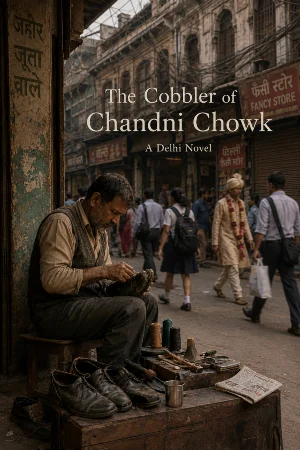
The Cobbler of Chandni Chowk is told almost entirely from a single fixed point — Ramesh’s stool on the corner of Dariba Kalan and the main bazaar road, where he has sat since 1983. The novel’s structure is the city’s rhythm: the morning chai, the shop shutters going up, the lunch hour, the afternoon heat, the evening rush, the night. Repeat. For forty-one years.
What changes across those forty-one years is everything else. The families who walk past — the silver merchant’s three sons who became a lawyer, a shopkeeper, and an emigrant to Canada respectively. The spice trader whose shop burned in 1984 and was rebuilt and burned again in a different kind of fire in 1992. The woman who walked past every morning for twenty years and then one day didn’t, and Ramesh never found out why.
Lal writes dialogue in a mixture of Urdu-inflected Hindi and the specific cadences of Old Delhi speech that is completely untranslatable and somehow completely readable. The novel has been praised particularly for the way it renders class — Ramesh is not poor in the way literary fiction usually renders poverty, as a condition to be observed. He is a man with a trade, a regulars, a reputation, and very strong opinions about the decline of good leather.
Quiet, specific, and deeply humane. The kind of novel that makes a corner of a city feel like the whole world.


Reviews
There are no reviews yet.