
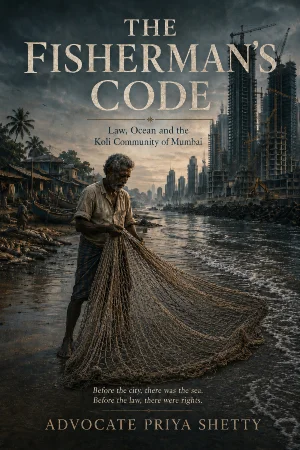
Description
The Koli community has fished the waters around what is now Mumbai for at least two thousand years. They are the original inhabitants of the seven islands that the British merged into a peninsula and eventually a city. Their koliwadas — fishing villages — sit inside Mumbai now as enclaves, surrounded by high-rises, with customary fishing rights that are legally recognised and practically under constant pressure.
Priya Shetty has spent fifteen years representing Koli communities in disputes with developers, port authorities, the Maharashtra Coastal Zone Management Authority, and occasionally the municipal corporation. The Fisherman’s Code is her account of those cases, but it’s also a legal history — tracing how fishing rights that predate colonial law got incorporated (imperfectly) into colonial legislation, survived independence (partially), and are now being eroded by a combination of coastal regulation that doesn’t account for traditional use and real estate pressure that is simply enormous.
The case studies are the heart of the book. A koliwada in Versova whose traditional fishing grounds were reclassified as ‘no-development zone’ in a way that prevented the fishermen from using them but not developers from building adjacent to them. A community in Dharavi’s coastal edge whose rights to the mudflats were legally clear but administratively impossible to enforce. A landmark case in 2019 where Shetty’s clients won on paper and then spent three years trying to get the order implemented.
Shetty writes as a lawyer who is also an activist, which means she has opinions and is not hiding them. But the legal analysis is rigorous and the case documentation is meticulous. This is a model of what legal non-fiction can do — make the dry machinery of law visible and show exactly who gets ground up in it.
Essential reading for anyone interested in urban rights, coastal law, or the specific situation of Mumbai’s indigenous communities.



Reviews
There are no reviews yet.