
Description
The Marwari merchants who moved out of the Shekhawati region of Rajasthan in the 18th and 19th centuries are one of the most successful trading diasporas in world history. By the mid-20th century they controlled significant portions of India’s textile, jute, and commodity trade. Names like Birla and Bajaj and Goenka are part of the general record. What Prof. Sunil Marwah is interested in are the hundreds of merchant families just below that level — successful enough to build extraordinary havelis in their home villages, not famous enough to have biographers.
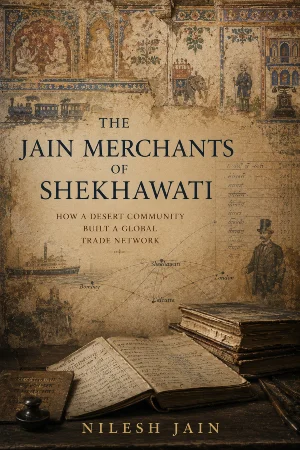
The Jain Merchants of Shekhawati reconstructs the trade networks of twelve merchant families across three centuries, using account books, family correspondence, temple donation records, and the havelis themselves as historical documents. The fresco programmes on these buildings — which famously include images of cars, trains, telephones, and European figures alongside traditional religious iconography — turn out to be sophisticated records of the families’ economic activities and geographic reach.
The book’s most original contribution is its analysis of the Jain credit network — how religious identity, commercial reputation, and community enforcement mechanisms created a trading system that could extend credit across thousands of miles without formal banking infrastructure. Marwah shows that this system was more sophisticated in some respects than the formal credit markets that eventually displaced it.
The chapter on the decline of Shekhawati itself — as the merchant families moved to Calcutta and Bombay and stopped returning — is quietly devastating. The havelis stand empty or partially occupied, their frescoes fading, maintained by caretakers whose grandparents were the merchants’ employees.
Dense academic history that is somehow also a good read. Marwah has a dry wit that surfaces occasionally and is all the more effective for its rarity.




Reviews
There are no reviews yet.