
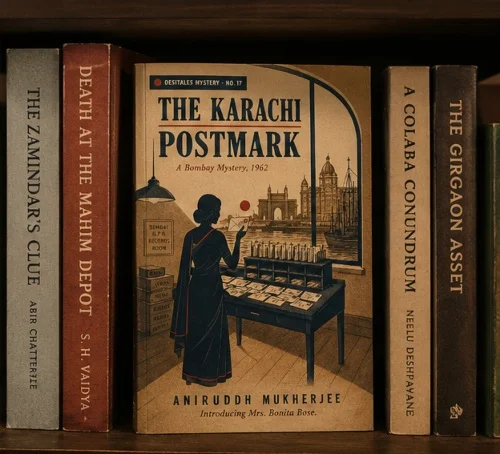
Description
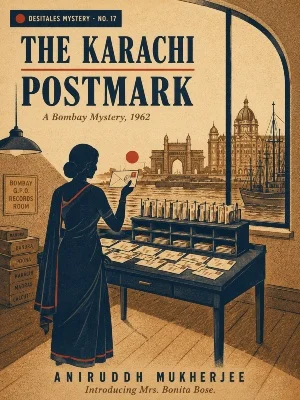
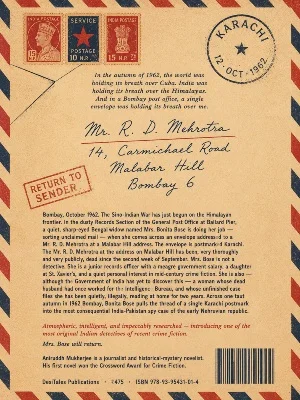
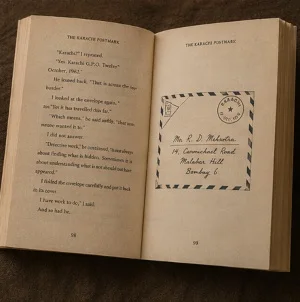
Bombay, October 1962. The Sino-Indian War has just begun on the Himalayan frontier. The newspapers are full of Nehru and McMahon Lines. And in the dusty Records Section of the General Post Office at Ballard Pier, a quiet, sharp-eyed, thirty-four-year-old Bengali widow named Mrs. Bonita Bose is doing her job — sorting unclaimed mail — when she comes across an envelope addressed to a Mr. R.D. Mehrotra at a Malabar Hill address.
The envelope is postmarked Karachi.
The Mr. R.D. Mehrotra at the address on Malabar Hill has been, very thoroughly and very publicly, dead since the second week of September.
Mrs. Bose is not a detective. She is a junior records officer with a meagre government salary, a daughter at St. Xavier’s, and a quiet personal interest in mid-century crime fiction. She is also — although the Government of India has yet to discover this — a woman whose dead husband had once worked for the Intelligence Bureau, and whose unfinished case files she has been quietly, illegally, reading at home for two years.
Across one taut autumn in 1962 Bombay — the Cathedral Cafe meetings, the Marine Drive after-dark, the tense Foreign Office at Apollo Bunder — Bonita Bose pulls the thread of a single Karachi postmark into the most consequential India-Pakistan spy case of the early Nehruvian republic.
Atmospheric, intelligent, and impeccably researched, *The Karachi Postmark* introduces one of the most original Indian detectives of recent crime fiction.

Reviews
There are no reviews yet.