
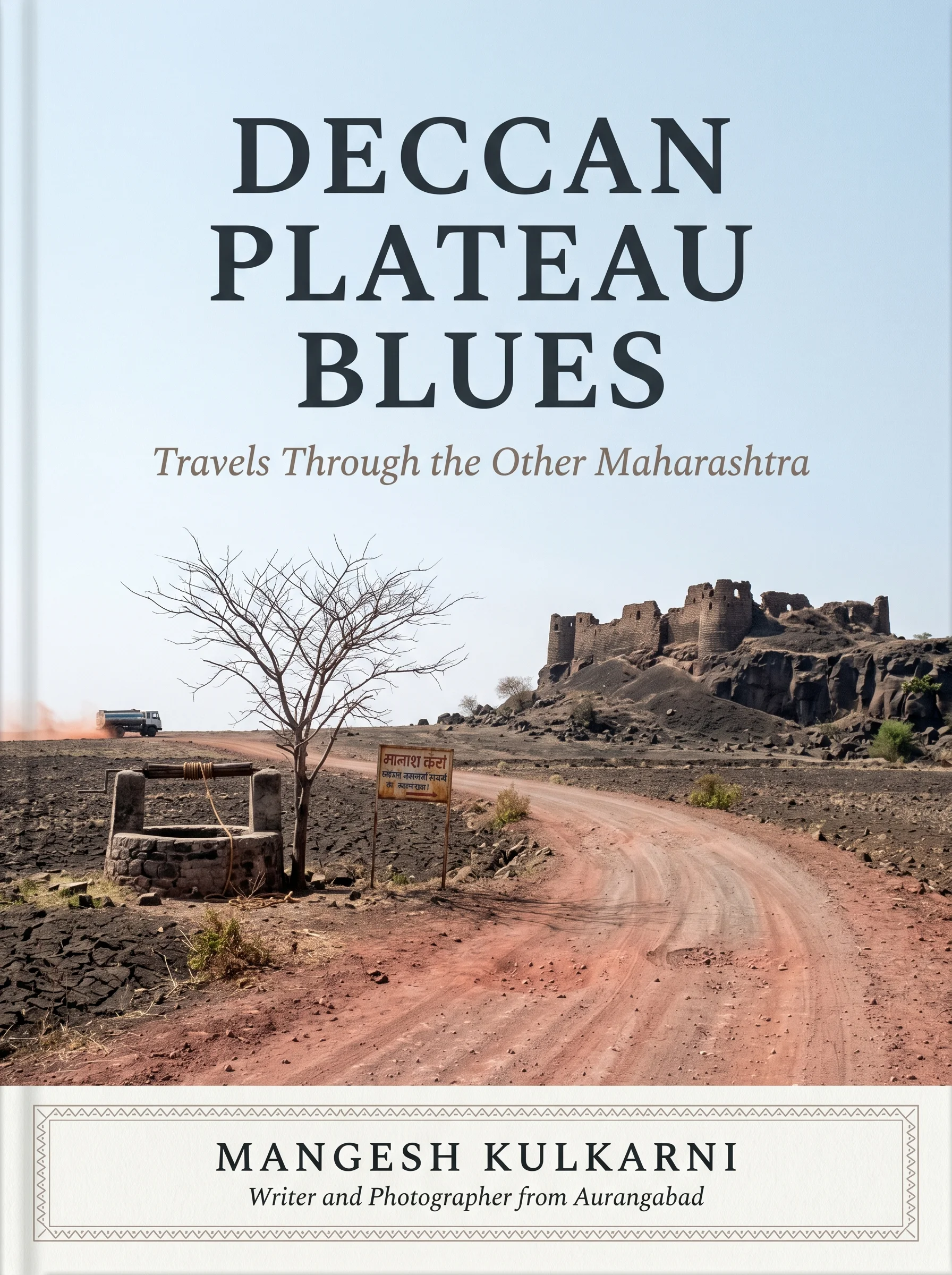
Description
Mangesh Kulkarni was born in Aurangabad and spent twenty years in Pune and Mumbai before he came back. The return trip, which was supposed to be temporary, became permanent when he started driving the Deccan plateau and realised he’d spent two decades not knowing what was an hour from where he grew up.
Deccan Plateau Blues is the book of those drives — three years of weekends and extended trips through Marathwada, Vidarbha, and the rain shadow districts of western Maharashtra that the monsoon skips most years. Kulkarni is interested in the specific texture of drought-adapted life: the water tankers that are the real infrastructure of villages in Osmanabad and Latur, the livestock decisions that farmers make in April based on what the sky looked like in October, the migration patterns that empty whole villages between November and May.
The fort chapters are a different kind of travel writing — Kulkarni is a serious amateur historian of the Maratha period and the descriptions of Daulatabad, Lohagad, and a dozen lesser-known hill forts in the Sahyadri range are some of the best writing on Maratha military architecture available in English. He climbs them in the early morning before the tourists arrive, which in most cases means he has them to himself entirely.
The food writing is exceptional. The Deccan plateau has a distinct cuisine — bajra-based, heavily spiced, built for a hot dry climate — that has almost no presence in the restaurant culture of Pune or Mumbai. Kulkarni eats in dhabas and home kitchens and writes about food the way a person who actually eats writes about it, not the way a food journalist performs eating.
A love letter to an overlooked landscape, from someone who had to leave it to learn how much he loved it.
Reviews
There are no reviews yet.